
What are the key design considerations for a low-visible weld line on injection molded automotive interior parts?
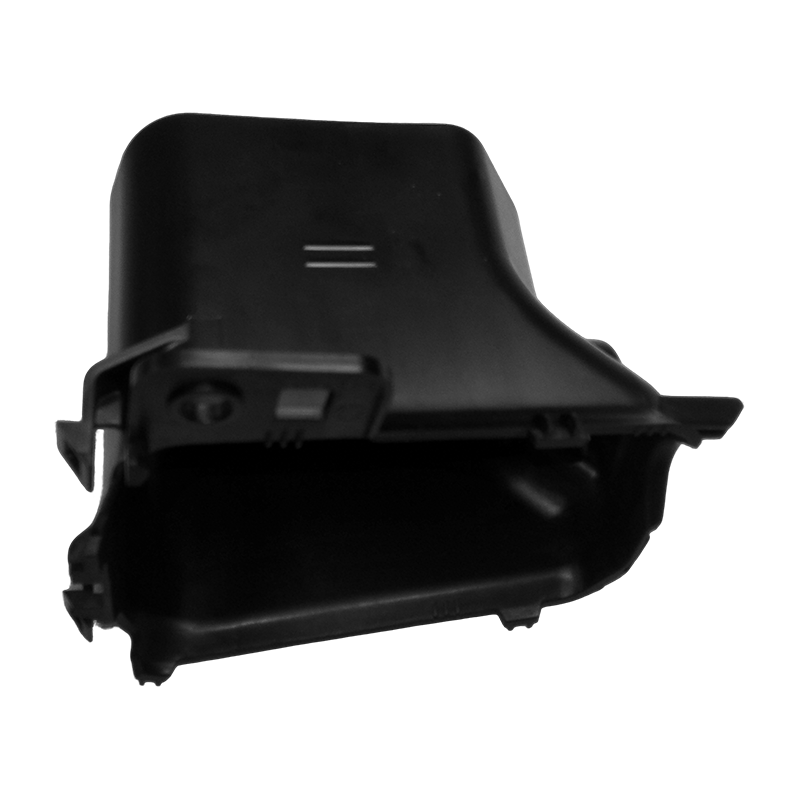
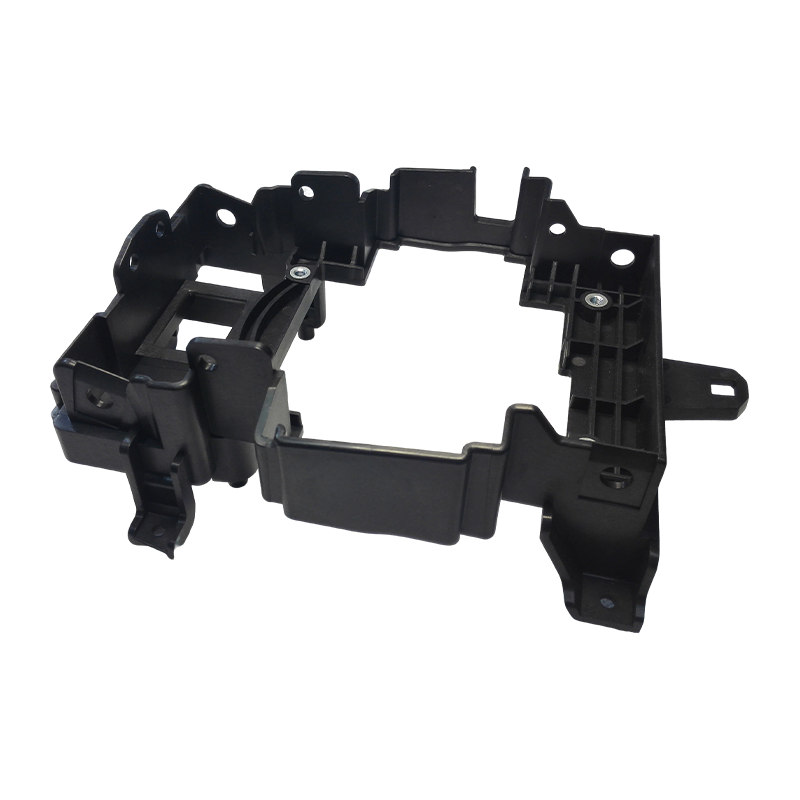
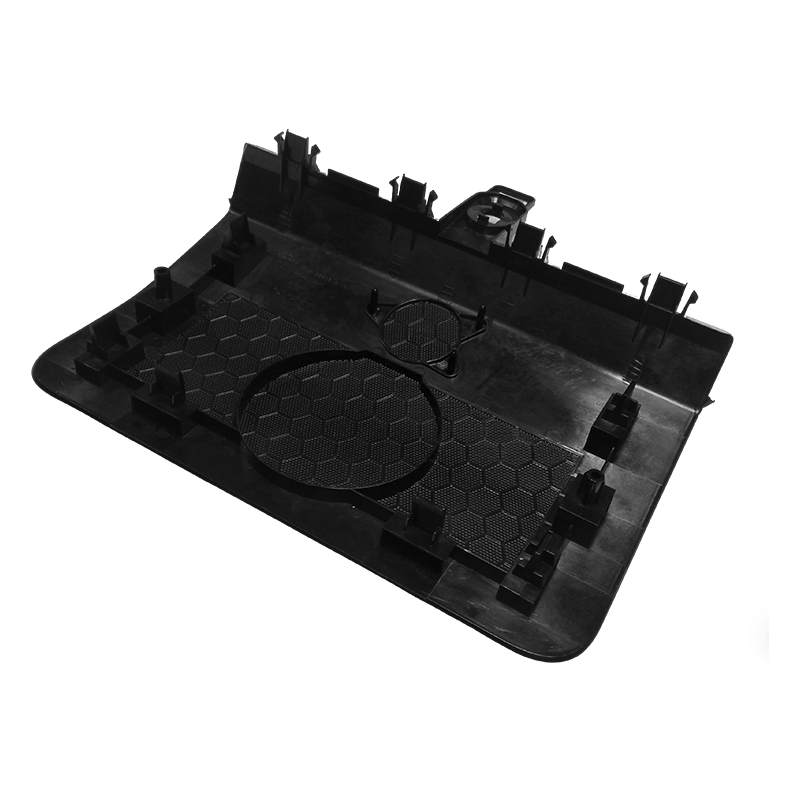
A weld line (or knit line) forms when two melt fronts meet during cavity filling, creating a visible line and potential mechanical weak point. In automotive interior parts with Class-A surfaces (e.g., door panels, instrument panel trim, glove boxes), weld lines must be minimized or rendered invisible to meet aesthetic and customer requirements.
1. Key Design Considerations for Low-Visible Weld Lines
| Consideration | Design Strategy | Typical Parameter / Effect | Application at Fanze T&M (Jiashan) Co., Ltd. |
|---|---|---|---|
| Gate location & number | Position gate(s) to move weld lines to non-visible or low-stress areas (e.g., ribs, corners, or surfaces covered by assembly). Use sequential valve gating to eliminate weld lines. | Single gate: weld line avoided. Dual gates: weld line moves to edge or hidden surface. Valve gate sequence delay: 0.1–0.5s. | Applied on door panel molds for British Land Rover, reducing visible weld lines by 90%. |
| Melt temperature & mold temperature | Increase melt temperature to improve flow front fusion. Use high mold temperature (via oil or electric heating) near weld line zone to delay skin freezing. | For PC/ABS: melt 260–280°C, mold 80–100°C. For PP EPDM-T20: melt 220–240°C, mold 50–70°C. | Implemented on instrument panel trim for SAIC, achieving weld line strength >85% of base material. |
| Venting design | Add deep venting (0.02–0.04 mm depth) at weld line location to allow trapped air and volatiles to escape, improving fusion. | Venting land length 3–5 mm, followed by 0.5–1.0 mm deep relief channel. Vacuum assist optional for critical areas. | Used on glove box molds for Changan, eliminating burn marks and reducing weld line visibility by 70%. |
| Melt flow front velocity | Use injection profiling : slower speed just before weld line formation to allow air escape, then higher speed to force fusion. | Typical profile: 80% speed for first 95% fill, then 60% speed for 3%, then 100% for final 2%. | Standard practice for all visible automotive interior molds at Fanze T&M (Jiashan) Co., Ltd. |
| Part wall thickness transition | Avoid abrupt thickness changes near weld line. Use gradual transition (≤30% thickness change per 10 mm length) to prevent flow hesitation. | Ratio thick/thin ≤1.5:1. Transition radius ≥3 mm. | Designed into charging pile bezels (PC/ASA) for ABB, achieving no visible weld line under grazing light. |
2. Typical Parameters for Low-Weld-Line Automotive Interior Materials
| Material | Melt Temperature Range (°C) | Mold Temperature Range (°C) | Recommended Vent Depth (mm) | Weld Line Visibility Reduction |
|---|---|---|---|---|
| PC/ABS (e.g., Bayblend T65) | 260–280 | 80–100 | 0.02–0.03 | Up to 80% (with valve gating) |
| PP EPDM-T20 (e.g., Hifax) | 220–240 | 50–70 | 0.03–0.04 | 60–75% |
| ABS (e.g., LG ABS HF380) | 230–250 | 60–80 | 0.02–0.04 | 50–65% |
| PMMA ASA (e.g., SABIC Cycoloy) | 250–270 | 70–90 | 0.02–0.03 | 85% (highly critical for high-gloss surfaces) |
Note: Values are typical for automotive interior parts with Class-A surface requirements, based on IATF16949 process capability and Japanese/German injection molding machines used at Fanze T&M (Jiashan) Co., Ltd.
3. FAQs
FAQ 1: Can weld lines be completely eliminated on automotive interior parts? What does Fanze T&M (Jiashan) Co., Ltd. recommend?
A: Complete elimination is only possible with single-gate designs, which may not be feasible for large or complex parts. For most automotive interior applications, the goal is to render weld lines low-visible (not noticeable under grazing light or to the naked eye). Fanze T&M (Jiashan) Co., Ltd. recommends a combination of valve gate sequencing, high mold temperature, and optimized venting . For the best results, the company offers automotive interior plastic parts injection mold solutions that include mold flow analysis to predict and reposition weld lines before steel is cut.
FAQ 2: Does weld line strength correlate with visibility? How does Fanze T&M (Jiashan) Co., Ltd. ensure both strength and appearance?
A: Yes. A more visible weld line usually indicates poor fusion, which reduces mechanical strength (down to 30–80% of base material). Fanze T&M (Jiashan) Co., Ltd. uses the following to achieve both low visibility and high strength:
- Injection profiling (slow–fast–slow) to improve molecular interdiffusion.
- Hot runner with valve gates to control flow front convergence angle (target >120°).
- Vacuum venting for critical safety-related interior parts (e.g., airbag covers).
The company has successfully delivered such solutions to British Land Rover and Triumph Motorcycles, meeting both PV1200 (thermal cycling) and visual inspection standards.
FAQ 3: What experience does Fanze T&M (Jiashan) Co., Ltd. have in automotive interior molds specifically for low-weld-line design?
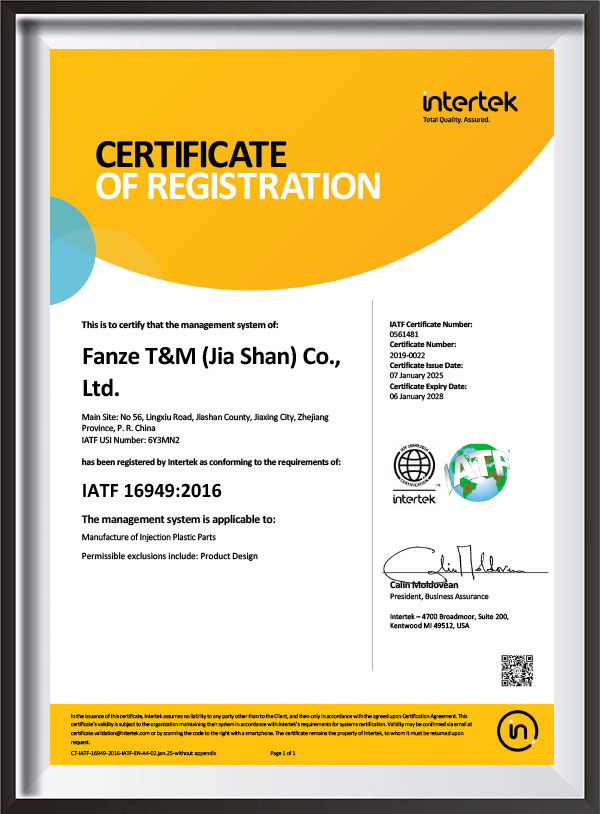
A: Fanze T&M (Jiashan) Co., Ltd. was founded in 2005 and specializes in precision injection molds and injection parts. The company moved to Guigu Park, Jiashan County in 2016, with a 14,000 m² usable plant area and about 100 employees. It owns imported CNC, EDM, slow-moving wire cutting machines, and high-performance injection molding equipment from Japan and Germany. The company is IATF16949 certified. Specific experience includes:
- Over 50 automotive interior mold projects delivered for SAIC, Changan, and British Land Rover.
- Successfully reduced weld line visibility on PP EPDM instrument panel trim from visible (grade 3) to near invisible (grade 1 under ASTM D2457).
- Used Moldflow analysis as standard practice for all Class-A surface parts.
The company adheres to the quality policy of "precision, high efficiency, casting quality" and has won high praise from domestic and international customers.